
Applying public service standards to private sector governance
If someone had asked me in January 2025 where I saw myself a year later, joining the private security industry wouldn’t even have featured on the bingo card.
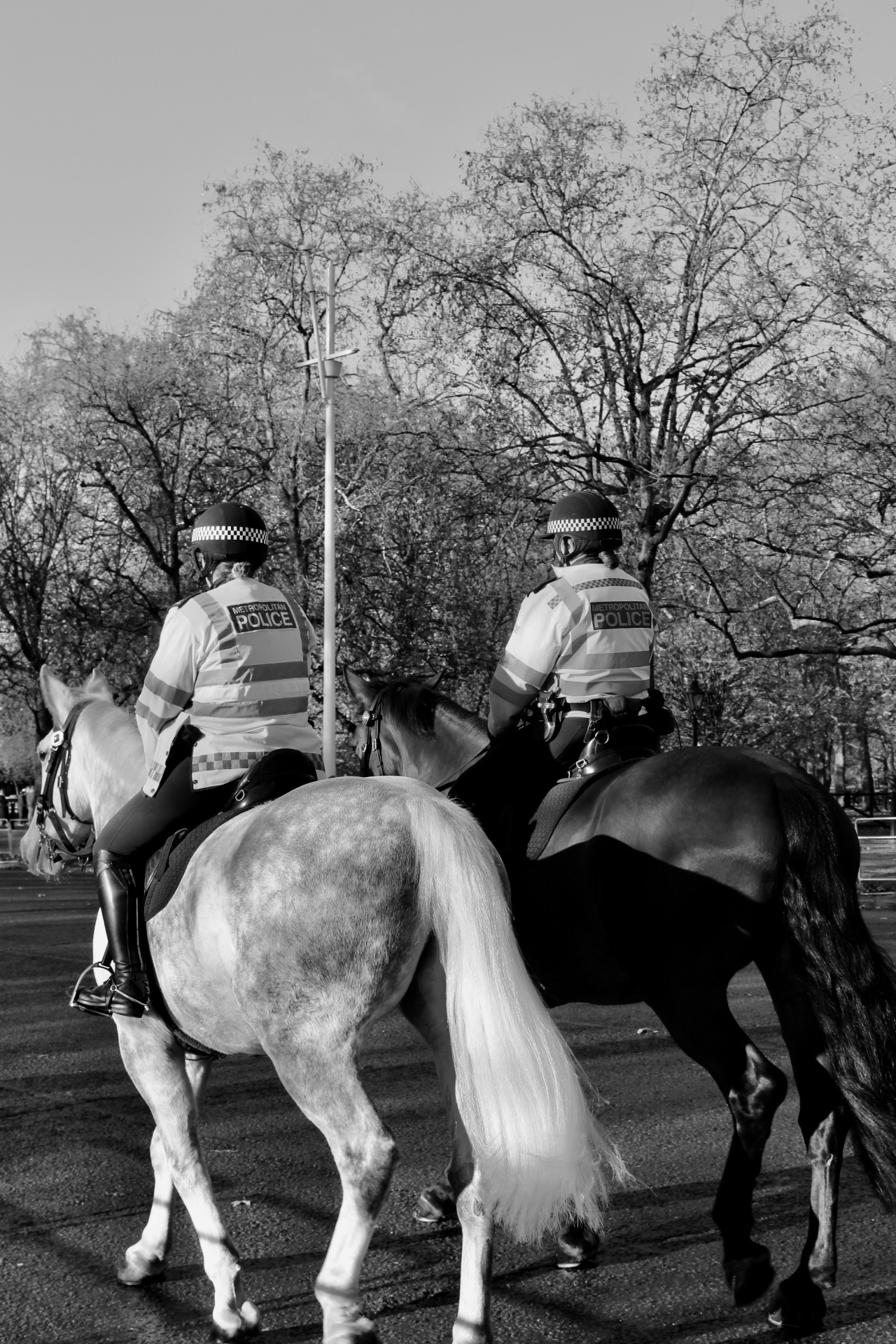
I was 21 years old when I joined the Metropolitan Police, having grown up in a relatively small town in Essex and with a certain naivety about the world. I’d just completed a degree in Criminology and Psychology, which had prepared me in principle, but not in practicality. Sixteen years later, after a range of roles, including emergency response, sex offender monitoring and safer neighbourhood policing, I made the decision to leave the police. It was not a decision taken lightly, and it came with a degree of apprehension. I had always assumed that if I left the police, it would be to do something entirely different. I did not anticipate moving into a senior governance and finance role within private security.
The shift from uniform to a corporate landscape, and from operational decision-making to governance, risk and financial oversight, initially felt daunting. Yet, in practice, the distance between the two is far smaller than it appears. Sixteen years in policing fundamentally shapes how you see the world. You develop an acute awareness of risk, not as an abstract concept but as something that affects real people, in real time. You learn accountability, often through experience rather than theory. Perhaps most importantly, you learn that decisions made at senior levels do not remain on paper; they translate into actions on the ground, affecting communities, colleagues and outcomes.
Since joining A.R.C., I have stepped into a world that is entirely new and familiar at the same time. The operational context is different, but the principles are the same: professionalism, integrity, resilience, judgement and mediation. These values are framed differently in a commercial environment, but they remain central to effective and ethical practice.
Working in governance and finance after policing offers a distinct lens. Policies are not just documents, controls are not simply processes, and budgets are more than figures on a page. They shape behaviour, capability and culture. Having worked within a highly scrutinised public institution, you become attuned to the consequences of weak governance and to the value of clarity, accountability and oversight when they are done well.
One of the most significant adjustments has been navigating the commercial realities of private security while holding on to the standards embedded through public service. Profit and public good are not mutually exclusive, and should be the standard to which the industry strives, through deliberate leadership, sound governance and a clear ethical compass.
Much has been written about women in male-dominated industries, often focusing on difficulty or division. My own experience of gender inequality has at times been challenging, with both overt and more nuanced forms of stereotypes and discrimination. I believe that everyone, regardless of their demographic, has something to offer. In both policing and security, authority is often tested before it is accepted, and experience is questioned before it is trusted. What matters most in senior roles, however, is consistency, judgement and the ability to lead with credibility and an unbiased viewpoint.
The private security sector is more complex and critical than it is sometimes given credit for. Governance, finance and ethical leadership play a vital role in shaping its professionalism and instilling public confidence. Visibility and diversity in leadership matters, not as a branding exercise, but as a signal that this industry can be led in a way that is measured, principled and grounded in experience, regardless of where that experience is gained.
Currently, women make up approximately 36.1% of police officers in England and Wales, compared with around 11% of SIA licence holders in the private security sector. The January SIA data shows that of the 460,138 licence holders, 242,000 identify as British, 72,000 as Pakistani, and 28,504 as Nigerian.
These numbers are not the complete picture, but they do highlight why diverse experience and perspectives at senior levels remain important for the future of private security and policing.